“To uncover your true potential, you must first find your own limits, and then you have to have the courage to blow past them.” — Picabo Street, American alpine skier and 1998 Olympic gold medalist
Every four years, the world gathers to watch something extraordinary: athletes who have dedicated their entire lives to moments that last mere seconds. The 2026 Winter Olympics in Milano Cortina is no exception. From the frost-covered mountains of Italy to the gleaming ice arenas, we’re witnessing stories that transcend sport—stories that remind us what it means to be human, to dream, to fail, and to triumph over the odds, over mental blocks, over fierce competition and adverse conditions and fatigue and falls and fears.
But these athletes are not just chasing gold medals. They’re teaching us something important, something important about our own lives. Their journeys remind us of our own struggles. Their victories remind us of our own potential, on a different scale for sure, but that we can also aim high and work hard and push through barriers, winning our gold. And their dogged resilience, their refusal to give up, their persistence in the daily grind shows us what’s possible when we also refuse to give up and let failure to define us.
The Winter Olympics, with its unique blend of preparation, grace in defeat, danger, grit and audacity, offers life lessons that reach beyond the slopes and rinks and points us down our own paths toward our own finish lines.
When Life Gets Messy, Stick to Your First Run
Norway’s Birk Ruud just proved something remarkable at these 2026 Games. On a gray, miserable day in Livigno where visibility was so poor that competitors were navigating “by feel,” Ruud nailed his first slopestyle run with a score of 86.28—a performance so clean it held up through everyone else’s attempts. While eight of the eleven skiers before him crashed, Ruud found his zone.
Even more telling: in his victory run, already guaranteed gold, Ruud went all-in trying an even harder combination. He crashed, bloodied his lip, and smiled through it all. “I was just trying to go beat myself up again,” he said afterward, gold medal gleaming despite the fresh wound.
Here’s the lesson: Sometimes conditions are terrible. The weather’s bad, you can’t see clearly, and everyone around you is falling. But if you trust your preparation and execute your plan with precision, you can succeed, sometimes against the competition, sometimes simply by finishing, other times by just showing up. For most of us, most of the time, we get to define victory. And so we get to decide how to celebrate our wins as well.
Ruud’s approach to big air—which also won him gold in 2022—reveals his philosophy: “I’m free as a bird while I go, which is one of the best feelings in the world. I’m just very happy and thankful to be able to experience that.”
Life rarely offers perfect conditions. The key is showing up prepared, trusting yourself, and finding freedom in the doing and gratitude to be able to do it rather than obsessing over the outcome.
The Broken Medal That Symbolizes Everything
Twenty-year-old Alysa Liu’s gold medal literally broke. Just hours after helping Team USA clinch gold in the figure skating team event with a stunning performance to Laufey’s “Promise,” Liu jumped for joy with her medal—and it snapped right off the ribbon. The medal got scratched, dented, and had to be replaced.
“I actually liked it when it was off the ribbon, but that’s not allowed,” Liu said with characteristic humor. When asked if she could keep the broken one, she admitted, “I was like, can’t you just fix this one? I’m attached, but it’s OK. I’m detached, just like it was.”
Liu’s journey to that medal is even more remarkable. She retired from skating at just 16 after the 2022 Beijing Olympics. Two years of normal teenage life followed—school, photography, climbing to Mount Everest base camp.
Ok, maybe not exactly normal. Then, during a ski trip in January 2024, she felt the adrenaline rush she’d been missing. “I realized school was hard, but it was not challenging enough for me,” she explained to Cosmopolitan. “Skating gave me something to be strong for. I love having willpower.”
Within months, she returned to competition. By 2025, she was world champion. By 2026, she was standing on an Olympic podium. “What I’ve experienced the past two years has been nothing short of just incredible,” she reflected after winning gold.
The broken medal is perfect. It reminds us that achievements aren’t about pristine trophies we display forever—they’re about the moments of pure joy that crack us open. Sometimes the most meaningful successes come when we step away, rediscover what truly drives us, and return on our own terms.
When we seek challenge, we experience growth. When we grow, our lives are filled with expectation, improvement and the self acknowledgement that we’re better today than we were yesterday. We feel alive. We feel joy, that spark of confidence and meaning that we’re pursuing something that matters to us. Something that had purpose. We’re on a path. One of our own choosing.
Success Isn’t Always About Beating Others
American freeskier Alex Hall came into the 2026 Olympics as the defending champion from Beijing. The slopestyle course in Livigno was brutal—“probably the hardest rail course I’ve ever skied,” he admitted. His chances of repeating were slim.
The night before finals, he went to bed thinking, “The odds of getting a medal are so slim… the run I was going to try and do, the chances of landing that [were small].”
But Hall had a revelation: “The four years in between, it didn’t ever feel like there was a day where I was like, ‘I’ve got to go train so I can get a medal’ or ‘I’ve got to go train so I can beat this person.’ I’m just gonna go ski, and I like skiing, so in a way it felt effortless because you’re just excited to go ski every day.”
He landed his impossibly difficult run. It earned him silver, just half a point behind Ruud. “Maybe, in a way, I’m almost more proud of it,” Hall said. “I’m really proud of myself for keeping up with how good everyone is nowadays.”
This echoes Bonnie Blair, the legendary speedskater who reminds us: “Winning doesn’t always mean being first. Winning means you’re doing better than you’ve ever done before.” Hall exemplified this perfectly—not fixated on defending his title, but on loving the process and executing at his highest level.
In our own lives, we often get trapped comparing ourselves to others, obsessing over rankings and outcomes, likes and follows. Hall shows us a better way: fall in love with the craft, show up with joy, and measure success by your own growth, not someone else’s scoreboard.
Honor What Brought You Here
When Birk Ruud stood on the podium listening to the Norwegian national anthem, his thoughts went to his father, who died of cancer in 2021.
“My dad is watching from somewhere else,” Ruud said. “When we played the national anthem, I was thinking of him and just everything that happens in life, and suddenly now I’m here, which is something I was working hard towards. Everybody here has been working towards it, and everybody is dreaming of the gold. When you think of all that, it’s a lot and I get emotional, which is beautiful. It’s a good feeling to have both happy and sad tears at the same time. It’s all beautiful.”
This capacity to hold joy and grief simultaneously, to honor those who shaped us even as we reach new heights, reflects deep maturity. Figure skating legend Kristi Yamaguchi captured this wisdom: “Focus, discipline, hard work, goal setting and, of course, the thrill of finally achieving your goals. These are all lessons of life.”
Our achievements are never ours alone. They’re built on the shoulders of parents, coaches, friends, rivals—everyone who pushed us, believed in us, or even doubted us. Remembering them in our moments of triumph isn’t weakness; it’s the very thing that makes those moments meaningful.
Comeback Stories Are Written in Years, Not Days
Picabo Street knows something about comebacks. After winning silver in downhill at the 1994 Lillehammer Olympics—a surprise medal that announced her arrival to the world—she set her sights on gold. Then disaster struck: a terrible crash kept her off skis for a full year.
She started racing again just eight weeks before the 1998 Nagano Olympics. A week before the opening ceremony, she fell again and was knocked unconscious for two minutes. Medical staff and coaches questioned whether she should compete at all.
Then the super-G course was delayed a day due to heavy snow. When race day finally came, the course was almost as straight as a downhill. Street made the bold choice to use downhill skis instead of super-G skis. She won gold.
Reflecting years later, Street shared what many find surprising: “I have to admit that even though the gold was incredible, the stuff dreams are made of, the silver medal I received in Lillehammer occupies a special place in my heart, because it was my first Games. I wasn’t expected to get a medal; I was really just there to take part, to feel that nervous energy, to savor the experience. And then, much to my and everyone else’s surprise, I ended up on the podium. That’s why it was so special to me.”
The road back is never linear. It’s filled with setbacks that test whether we truly want what we say we want. But as Street reminds us, sometimes the journey itself—with all its unexpected turns and hard-won lessons—becomes more precious than the destination.
Find Your Fire and Keep It Lit
Mary Lou Retton, the gymnast who captured America’s heart at the 1984 Olympics, once said: “Each of us has a fire in our hearts for something. It’s our goal in life to find it and keep it lit.”
This is perhaps the most important lesson the Olympics teach us. These athletes have found their fire. Alysa Liu found hers on a ski slope when she thought she’d left it behind on the ice. Alex Hall found his in the pure joy of skiing, not in medals. Birk Ruud found his in pushing boundaries while honoring his late father’s memory. Picabo Street found hers in the challenge itself, in refusing to let injury define her story.
The fire isn’t always about being the best in the world. Sometimes it’s about being true to yourself, showing up when it’s hard, and choosing courage over comfort. It’s about the willingness to break your medal celebrating victory, to cry tears both happy and sad on the podium, to compete when you’re scared, and to get back up when you fall.
As Muhammad Ali, the 1960 Olympic gold medalist, boldly stated: “He who is not courageous enough to take risks will accomplish nothing in life.”
While that may be an overstatement, the principle seems nonetheless true. You don’t pass the finish line without joining the race. You don’t build a successful company without starting it. And you don’t forge a wonderful marriage without first risking a date.
Sometimes you Fall and Can’t Get Back Up!
Sometimes you simply crash and burn. And sometimes with some crashes and some burns, you don’t get back up again, at least not for a long recovery mile! Except the kind that takes your breathe away. We saw lots of that this year. In the men’s snowboard half pipe runs, all three medal winners fell on their third run. Ilia Malinin was expected to win the gold in the men’s ice skating competition.
No one was close to him. He may have been able to stand there and imagine his routine and he still would have won gold. They even called him the Quad God. And he crashed and burned. The look on his disbelieving face after the program finally and mercifully ended told the whole story.
And yet, when push came to shove, he leaped to his feet, and congratulated the person he crowned gold by virtue of his terrible performance. He was warm and gracious and kind and courageous and amazing.
But the finer point here is that we fall. All of us. And so what! We face plant. So what! We think we’re the next piece of toast, but prove otherwise. And so what? As soon as pride gets in the way of growth and decency, we lose. Big time. As long as we allow humility and graciousness to prevail, no matter how often or how hard we fall, we win every time.
Your Own Winter Games
You don’t need to strap on skis or lace up skates to apply these lessons. Every day offers its own Olympic moments—times when we must choose between playing it safe and going all-in, between giving up and getting back up, between measuring ourselves against others and measuring ourselves against our own potential.
The 2026 Winter Olympics reminds us that excellence isn’t about perfection. It’s about showing up in terrible conditions and executing anyway. It’s about returning to what you love after walking away. It’s about doing the impossibly difficult thing and being proud when you come up half a point short. It’s about carrying both joy and grief to the podium and knowing that both belong there.
As Picabo Street so powerfully reminds us, the real challenge isn’t in avoiding limits—it’s in having the courage to blow past them.
So find your fire. Keep it lit. Show up even when conditions are poor. Trust your first run. Celebrate so hard your medal breaks. Honor those who got you here. And when you inevitably fall—because you will fall—remember that getting back up is what makes you an Olympian in the truest sense of the word.
After all, life, like the Winter Olympics, isn’t really about the medals. Not ultimately. It’s about who you become in pursuit of your own dreams, passions and priorities.
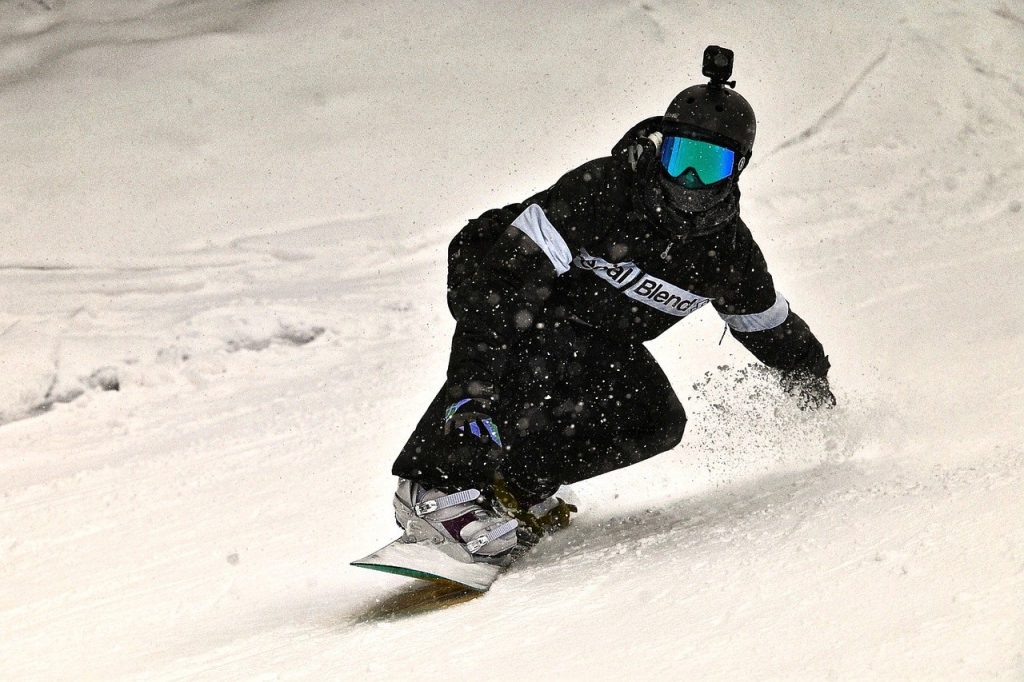
Photo courtesy of pixabay
Sign up for my eBook, A Walk Through Happiness and get my monthly newsletter for the same low price of FREE!
A Walk Through HappinessGet my FREE eBook and monthly newsletter by subscribing below!
Your email will NEVER be shared with anyone
About Me
My name is Ken Wert, the founder of M2bH. My purpose here is to share with you what I have discovered about the pursuit of happiness. God's plan for you and me has at its core our happiness. There are specific causes, principles upon which the blessings of a happy life are predicated. Join us on an adventure as we learn how to unlock our potential, apply those principles that naturally produce more joy, and enjoy the rewards of a life well lived. Read more ...











No Comment